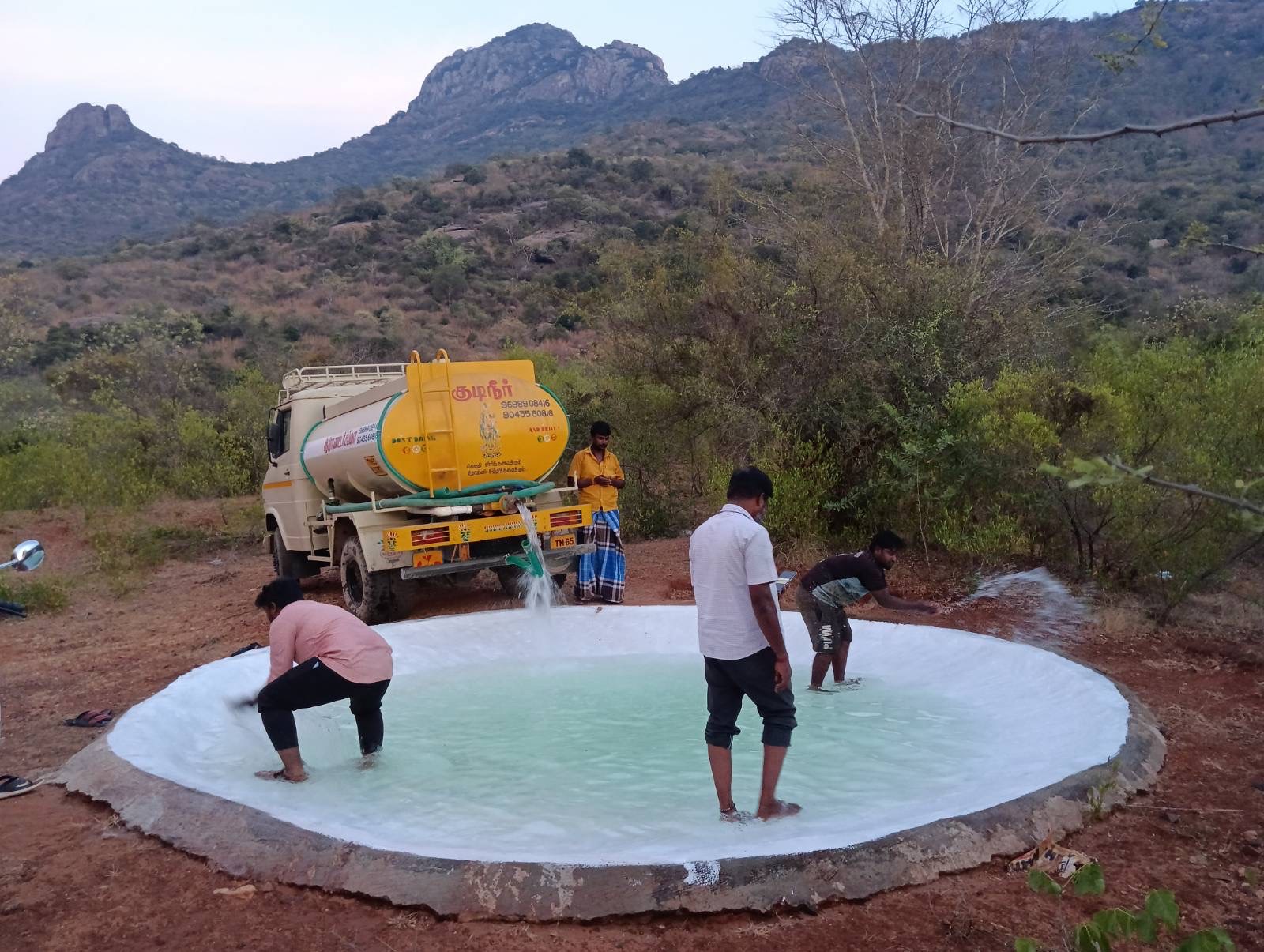
In the scorching summers around Tiruvannamalai, water does not just become scarce for people—it disappears for wildlife. Natural water sources dry up, forest ponds shrink, and animals are left to wander in search of a single drop. In their desperation, many venture closer to human settlements, risking conflict, injury, or death.
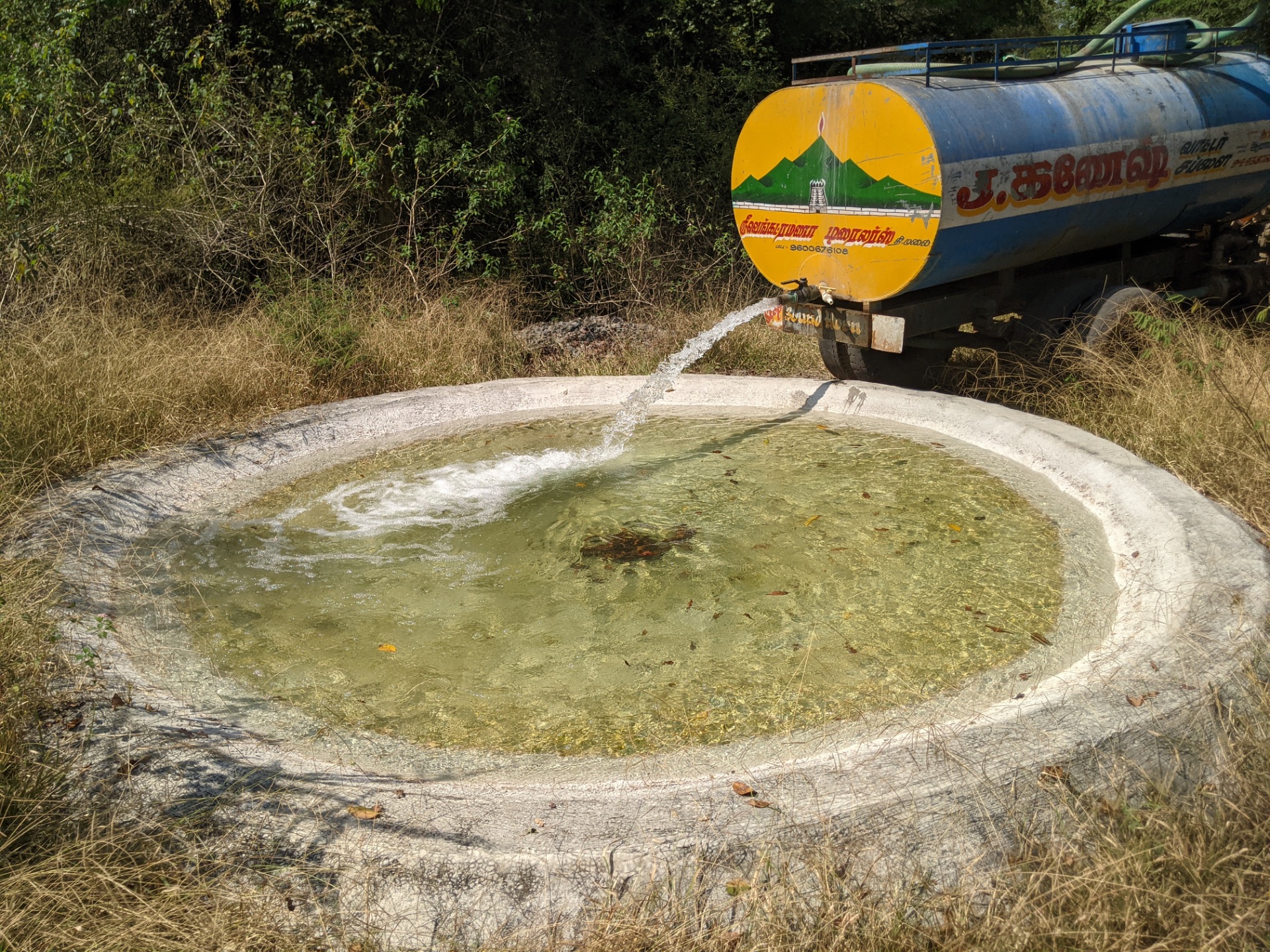
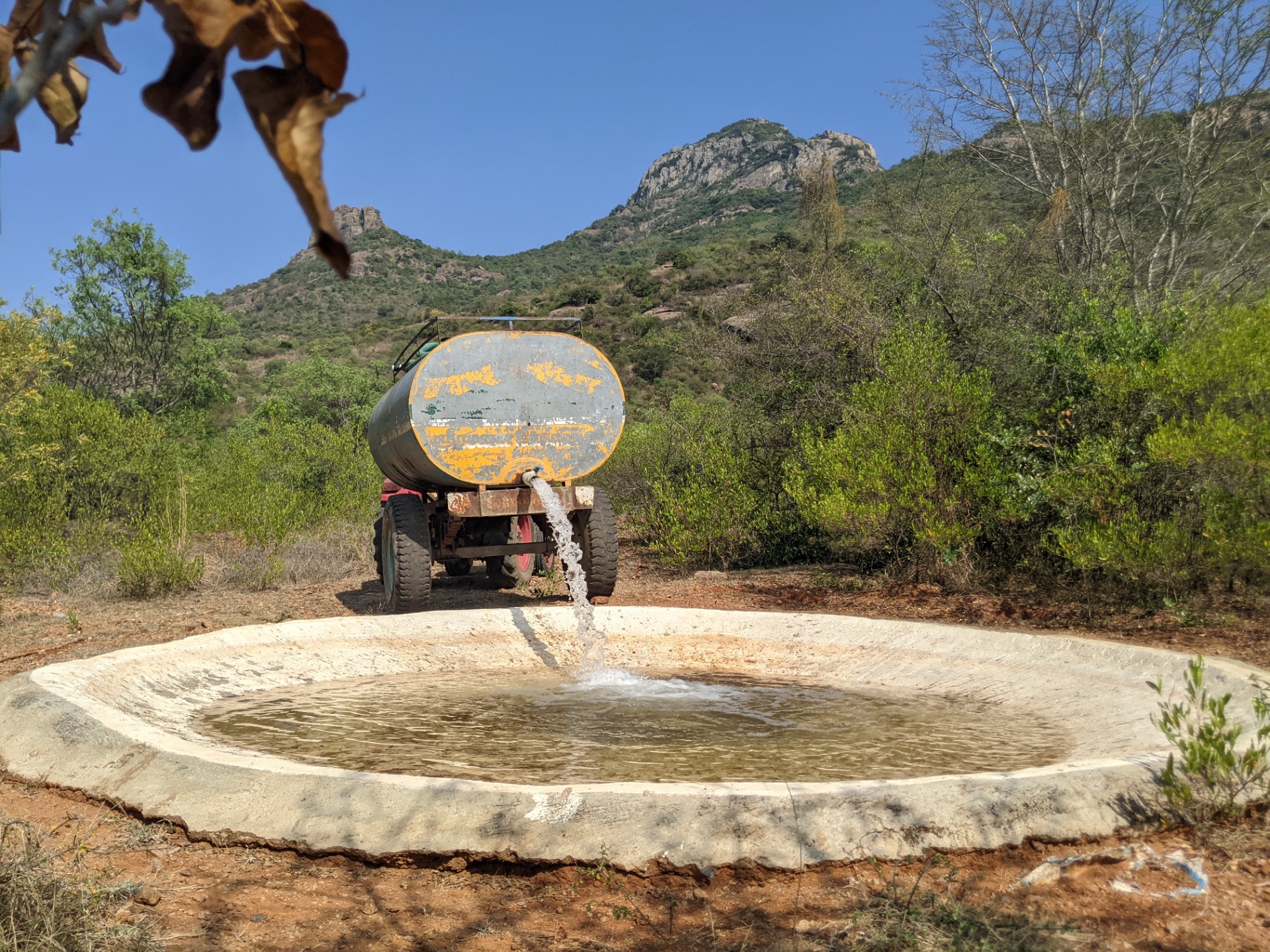
Regenboog’s Wildlife Water Project was created to respond to this silent crisis. By placing and maintaining water sources within forest and hill areas, we ensure that animals have access to life-sustaining water even during the harshest months.
Our team regularly travels into remote and often difficult terrains, carrying water, refilling troughs, and monitoring usage. This is physically demanding work under extreme heat, but it is essential. Each filled water point becomes a lifeline—not just for one species, but for entire ecosystems.
The impact is immediate and visible. Birds, deer, monkeys, and other wildlife begin to depend on these water sources, reducing their need to enter human areas. This not only protects animals but also helps prevent human-wildlife conflict, creating a safer environment for both.
At its heart, this project is about compassion beyond human boundaries. It is a reminder that survival is shared—that in caring for wildlife, we are also preserving the balance of nature itself. In a landscape where water becomes life, every drop we provide carries hope.
The forests around Arunachala Hill are home to various animals and bird species. During the summer months from February to July, natural water sources dry up completely, putting wildlife under severe stress.
Our team refill a network of 15+ earthen pots and concrete troughs positioned along animal trails and near known watering spots. Refilling happens on a weekly rotation.
Regular maintenance of the water stations is also taking place.
"Compassion is not limited to people; it extends to every life that depends on the land we share"
15+ active water stations across the Arunachala forest range
Weekly refilling by our team from February to July
Coordination with the Forest Department