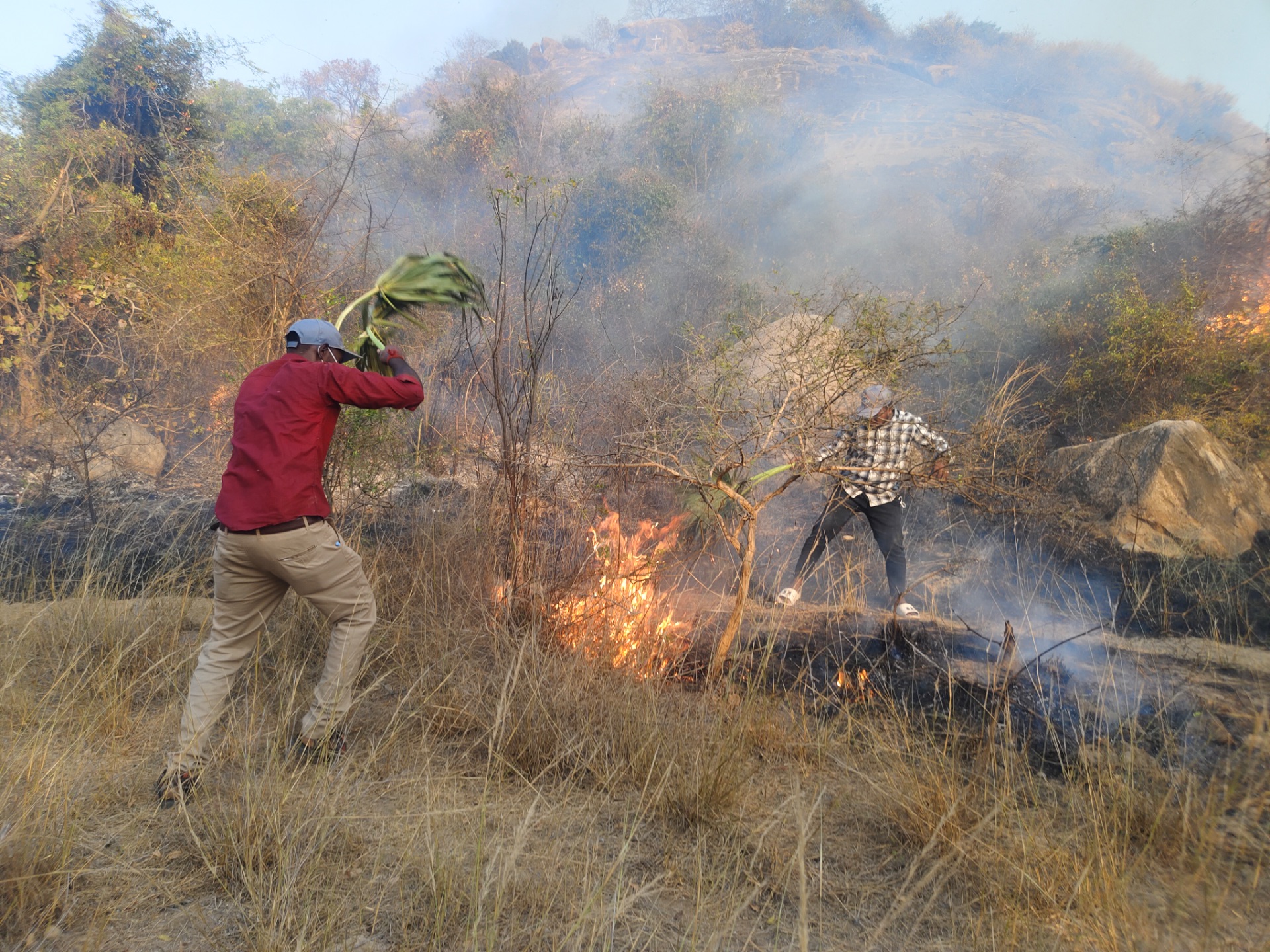
In the dry summer months around Tiruvannamalai, forests do not catch fire suddenly—they burn after weeks of silent warning. The land dries, leaves turn brittle, and a single spark is enough to turn vast stretches of forest into flames. What follows is not just a fire, but the loss of life, habitat, and years of natural growth within hours.
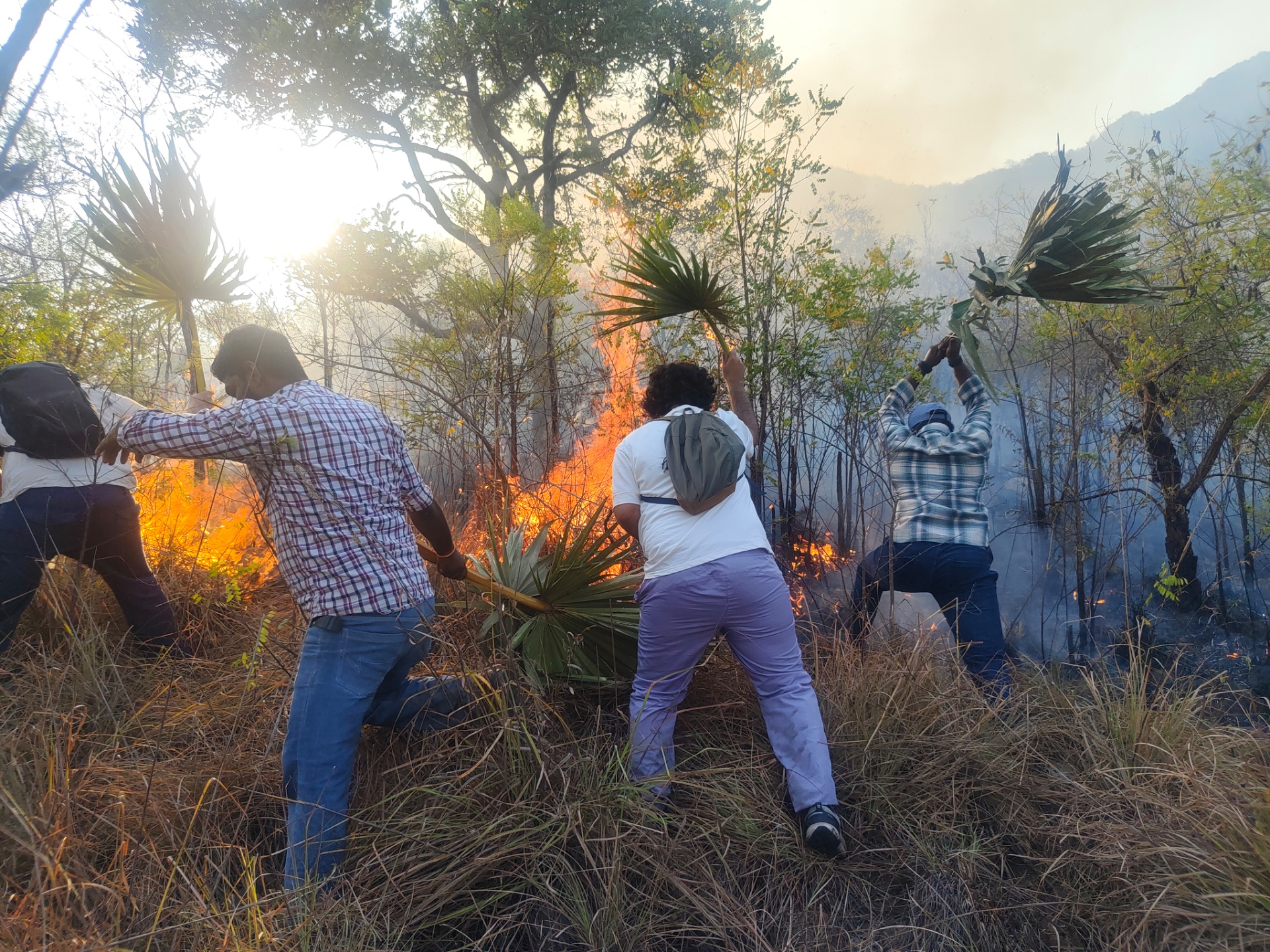
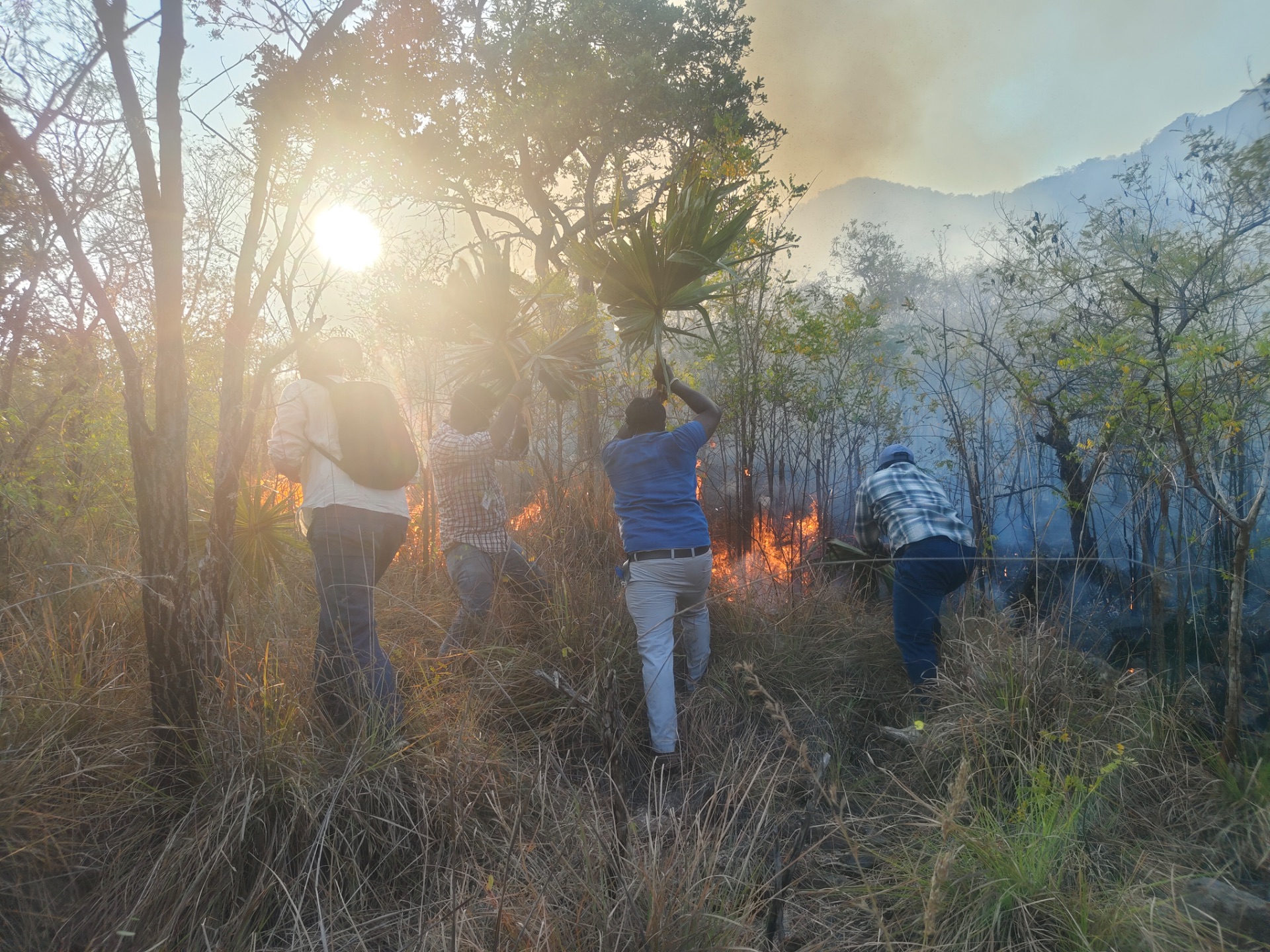
Regenboog’s Forest Firefighting Project exists to respond to this fragile reality with urgency and commitment. When fires break out in the surrounding hills and forest areas, our trained teams step in—often before official help can arrive—working tirelessly to control and contain the spread.
This is not easy work. Volunteers and staff walk long distances through rough terrain, facing intense heat, smoke, and unpredictable fire paths. Using basic tools, coordination, and experience, they create fire lines, beat back flames, and protect vulnerable areas, often risking their own safety to prevent greater destruction.
Every fire stopped is more than a moment of relief—it is the protection of biodiversity, the saving of animal habitats, and the preservation of a natural ecosystem that local communities depend on. It also prevents long-term damage to soil, air quality, and water systems.
At its core, this project is about standing in the gap—between destruction and preservation. It is about acting when it matters most, protecting what cannot protect itself, and ensuring that future generations inherit not ashes, but living forests.
Each year between January and May, dry grass and leaf litter accumulate around Arunachala, creating dangerous fire conditions. A single spark can devastate acres of forest and destroy the habitat of countless species in hours.
Our volunteer corps — men and women from the villages surrounding the hill — are trained in fire line creation, use of beaters, communication protocols, and safe evacuation. They work in close coordination with the Forest Department.
Beyond firefighting, the team conducts monthly nature-cleaning drives to remove plastic and waste from the forest, maintains firebreak clearings during the dry season, and runs awareness campaigns in surrounding communities.
"Arunachala is sacred to us. Protecting it is not just an environmental act — it is a spiritual one."
Volunteer corps of 20+ trained community members
Response time under 45 minutes during dry season alert
Firebreak maintenance: 1+ km of cleared perimeter each season
Coordination with Forest Department